
Decoding the Court: How Data Analytics Reframes Tennis Matchup Statistics
Guest Post
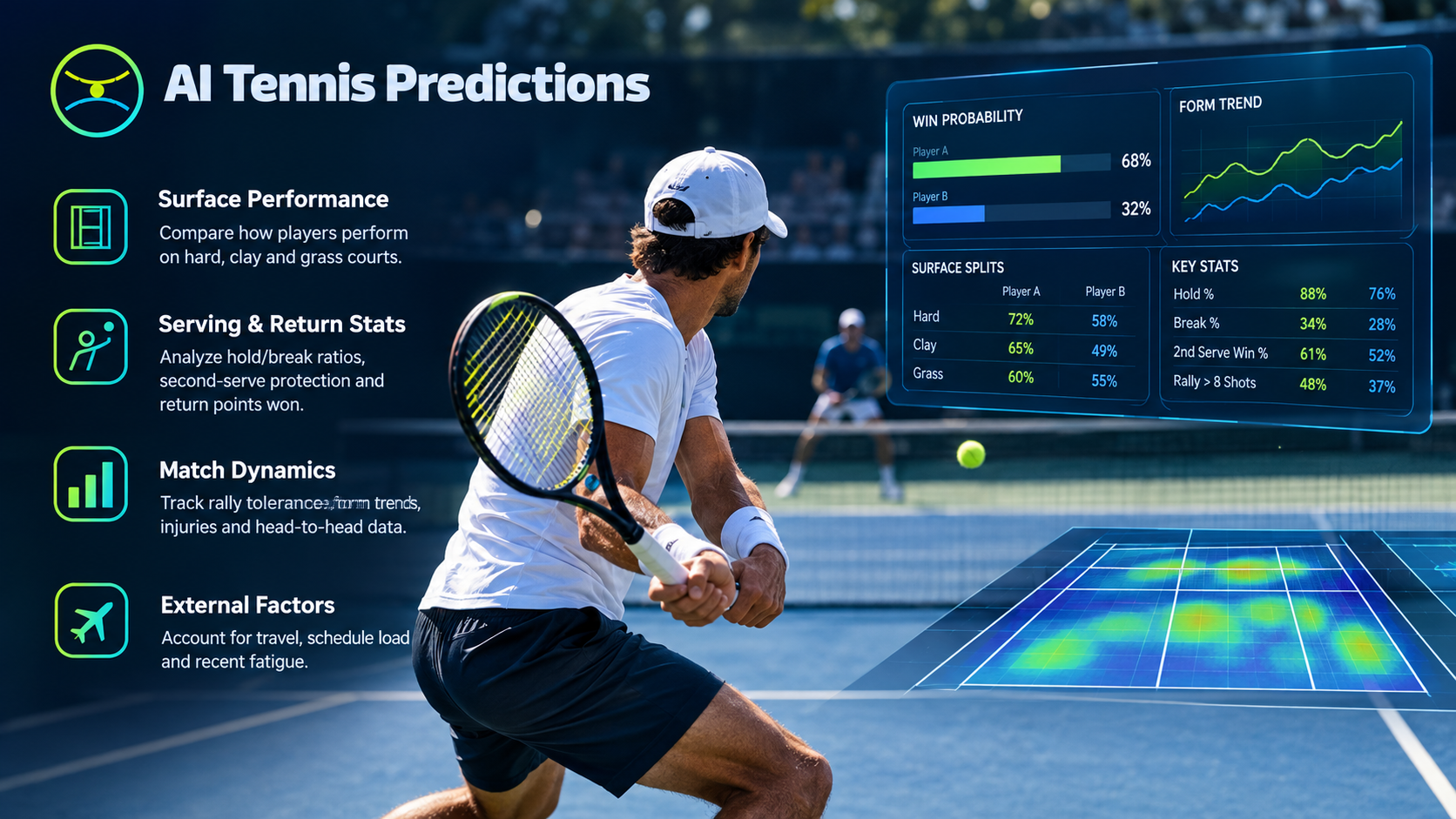
Standard tennis rankings trick even seasoned fans every single day. A player sitting at World No. 15 might look like a sure thing against a qualifier ranked 110th. But put them on fast red clay after a six-hour flight, and that paper advantage evaporates. That is where modern algorithms step onto the court. Platforms like aitennispredictions.com look beneath surface-level seedings to reveal what actually drives match outcomes. By processing live performance metrics, surface splits, and serving dynamics, advanced AI tennis predictions strip away narrative bias. You stop guessing based on reputation and start evaluating fixtures through real, measurable data.
Why Does a Hard-Court Champion Struggle on European Red Clay?
Court surfaces fundamentally alter how matches play out. What works on a fast, hard court in Cincinnati fails miserably on slow clay in Madrid.
Decoding ATP surface shifts
Hard courts reward big serves and quick point construction. Clay demands rally tolerance, sliding ability, and patience. A player with a monster serve might hold game after game on concrete, yet watch that weapon lose its edge on damp dirt. Smart statistical models treat each venue as a distinct environment. They compare recent holding percentages for specific surfaces rather than assuming that overall form translates across surfaces.
Handling WTA momentum swings
Women's tour matches follow a best-of-three format. That structure amplifies early breaks. A single shaky service game can lose an entire set. When you look at AI tennis predictions for WTA fixtures, algorithms weight return points won far more heavily than world rank. A player returning well can shatter an opponent's confidence in minutes, regardless of seedings.
How Data Models Spot Value Before the First Serve
Human brains naturally fall for recent headlines. Machine learning models do not care about media hype or past titles. They focus purely on numbers.
Here is what modern engines evaluate before generating actionable match previews:
-
Hold and Break Ratios: Measuring how reliably a player defends service games versus breaking opponents on identical surfaces.
-
Second-Serve Protection: Identifying players who get punished whenever their first serve fails to land.
-
Rally Tolerance: Tracking point success rates when exchanges extend past eight shots.
-
Scheduling and Travel Load: Factoring in long flights, back-to-back tournament weeks, and physical strain.
Using AI tennis predictions allows fans and analysts to evaluate these multi-layered variables simultaneously without drowning in endless spreadsheets.
Comparing Multi-Engine Perspectives for Sharper Match Insights
No single algorithm captures every subtle detail of a sport as fluid as tennis. Combining viewpoints from engines like DeepSeek, Claude, Gemini, and ChatGPT creates a far more complete picture of upcoming matches. If you want to elevate your match analysis with clear algorithmic insights across the ATP, WTA, and ITF tours, visit aitennispredictions.com for the structured breakdown you need before the action starts. Their platform brings together multi-engine evaluations so you can spot hidden matchup dynamics instantly.
Frequently Asked Questions About Tennis Analytics
Why do tournament formats alter prediction accuracy? Grand Slams demand five-set endurance for men, whereas standard tour events end in three. Five-set matches give top players time to recover from slow starts, changing how models calculate win probability.
How do AI tennis predictions handle lower-tier ITF matches? ITF events feature high player turnover and limited historical data. Algorithms compensate by analyzing short-term serving strength and break-point conversion rather than relying on deep head-to-head records.
Final Serve: Moving Beyond Traditional Seedings
Tennis moves fast, and raw rankings fail to track sudden changes in physical form or court speeds. Relying on world ranks alone leaves you blind to the subtle match dynamics that decide close sets. Data models cut through media noise by anchoring every preview in verifiable stats. Whether you follow Grand Slam finals or early-round ITF matches, leveraging AI tennis predictions helps you view every draw through a clearer lens. Head over to aitennispredictions.com today to explore daily match breakdowns and start evaluating fixtures with real analytical confidence.